
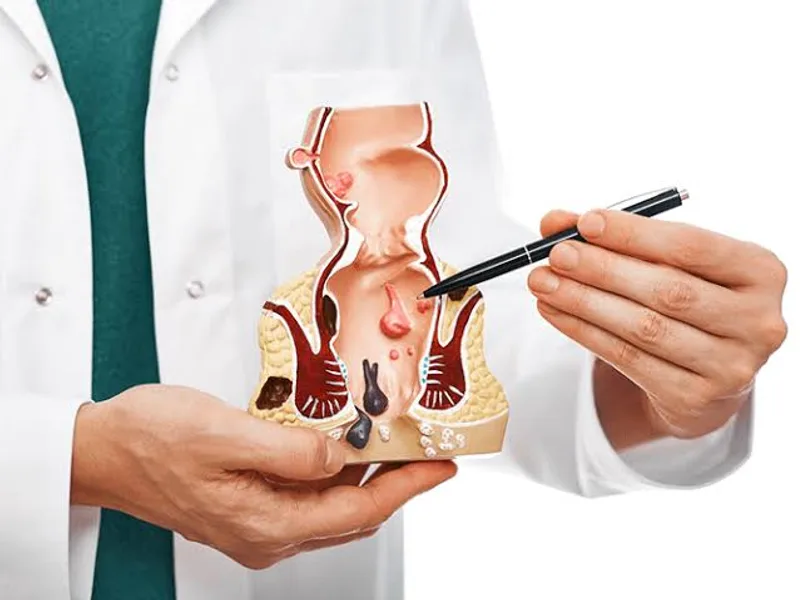
Piles laser surgery in India — also called laser haemorrhoidoplasty (LHP) — costs approximately ₹20,000 to ₹1,15,000 depending on city, hospital type, the grade of haemorrhoids being treated, and the specific laser technique used. In metros like Delhi and Mumbai, the average sits closer to ₹50,000 for a standard laser procedure. Most major private health insurance plans and government schemes such as AB-PMJAY and CGHS cover the procedure when medically necessary, but coverage details vary significantly by insurer and policy type.
Haemorrhoids — swollen blood vessels in and around the rectum and anus — are one of the most common anorectal conditions globally. A 2025 observational study published on Zenodo reported prevalence rates of haemorrhoids in India as high as 36% in the general population. According to the Association of Colon & Rectal Surgeons of India, around 50% of people may develop symptomatic haemorrhoids by the age of 50. Yet the condition remains undertreated in India because patients delay seeking care — often for months — due to embarrassment.
That delay frequently turns a Grade I or II case that could have been managed non-surgically into a Grade III or IV case that needs intervention.
What Piles Laser Surgery Actually Involves
Laser haemorrhoidoplasty uses a focused beam of laser energy — typically a diode laser at 1,470 nm wavelength — delivered through a thin probe inserted into the anal canal. The laser heats and coagulates (clots) the haemorrhoidal tissue, causing it to shrink and eventually be reabsorbed. No cuts, no stitches, and the surrounding tissue is largely spared.
The procedure is typically performed under local or spinal anaesthesia and takes about 20–45 minutes. Most patients go home the same day — it's classified as a daycare procedure in most hospitals. According to a 2025 comparative study published in the International Journal of Surgery (Shreya & Chandrashekhara, K.S. Hegde Medical Academy, Karnataka), the mean surgical duration for laser haemorrhoidoplasty was 30.87 minutes compared to 96.43 minutes for open haemorrhoidectomy.
A prospective observational study published in the Journal of Clinical and Investigative Surgery (Khan et al., 2021) compared laser haemorrhoidoplasty against open Milligan-Morgan haemorrhoidectomy in 100 patients. At 24 hours post-procedure, the mean pain score was 2.3 out of 10 in the laser group versus 5.1 in the open surgery group — a statistically significant difference (p < 0.008). Pain advantage held across the 1, 7, 14, 21, and 30-day follow-up periods.
Laser surgery does not eliminate recurrence entirely. The worldwide prevalence of haemorrhoids ranges from 2.9% to 27.9% and recurrence depends heavily on whether underlying causes — chronic straining, low-fibre diet, sedentary habits — are addressed post-procedure. Surgical haemorrhoidectomy carries roughly a 5% long-term recurrence rate; minimally invasive methods including laser procedures show higher recurrence rates of 15–50% over five years if lifestyle changes aren't made, per available international data.
Cost by Surgery Type: The Full Comparison
There are four main surgical approaches for piles in India. Understanding what each costs and what it involves helps patients have a more informed conversation with their surgeon.
Procedure | Average Cost (India) | Hospital Stay | Recovery Time |
Conventional Haemorrhoidectomy (open) | ₹6,000 – ₹70,000 | 1–2 days | 2–3 weeks |
Stapled Haemorrhoidopexy (MIPH) | ₹15,000 – ₹80,000 | 1 day | 1–2 weeks |
Laser Haemorrhoidoplasty (LHP) | ₹20,000 – ₹1,15,000 | Daycare (same day) | 2–7 days |
Rubber Band Ligation (non-surgical) | ₹8,000 – ₹20,000 | OPD / Daycare | 1–3 days |
Sources: Park Hospital cost data (September 2025); Livlong Insurance analysis; Miracles Healthcare Delhi cost table; Bajaj Finserv Health platform. Figures are ranges across public and private facilities nationally.
The wide laser cost range — ₹20,000 at a basic clinic to ₹1,15,000 at a premium corporate hospital — reflects equipment quality (laser machine type and maintenance), city tier, and the grade of haemorrhoids treated. A Grade I–II case is simpler and cheaper to treat than Grade III–IV with significant prolapse.
City-Wise Laser Piles Surgery Cost
City | Laser Piles Surgery Cost Range |
Delhi / Delhi NCR | ₹25,000 – ₹60,000 |
Mumbai | ₹40,000 – ₹1,15,000 |
Bangalore | ₹35,000 – ₹80,000 |
Hyderabad | ₹25,000 – ₹60,000 |
Chennai | ₹30,000 – ₹70,000 |
Kolkata | ₹30,000 – ₹70,000 |
Pune | ₹25,000 – ₹60,000 |
Tier-2 cities (Lucknow, Jaipur, Chandigarh etc.) | ₹20,000 – ₹50,000 |
Sources: Miracles Healthcare Delhi (2025); Lux Hospitals Hyderabad; Livlong Insurance verified analysis; DoctorsApp India. Metro figures average approximately ₹50,000 per Livlong's cited Delhi/Mumbai average.
Government hospitals in most cities offer open haemorrhoidectomy for ₹6,000–₹15,000 but may not have laser equipment readily available. For laser procedures, patients are generally directed to private or semi-private facilities.
What Drives the Cost Difference
Grade of haemorrhoids:
Grade I and II haemorrhoids require less laser energy and shorter procedure time. Grade III and IV — where the tissue protrudes or permanently prolapses — cost more to treat and may not always be suitable for laser alone, sometimes requiring a combined or stapler technique.
Laser technology used:
Standard diode laser (980 nm or 1,470 nm) is the most common and affordable. Advanced combined techniques — like Laser Haemorrhoidoplasty 360 (LHP 360) marketed by Healing Hands Clinic — or hybrid digital haemorrhoidal artery ligation with laser involve higher equipment and facility costs.
Hospital type:
NABH-accredited private hospitals charge a premium over non-accredited facilities. Corporate hospital chains — Fortis, Apollo, Manipal, Max Healthcare — sit at the higher end. Dedicated proctology clinics (Healing Hands, Pristyn Care, Lux Hospitals) often offer fixed-price packages that include surgeon fees, anaesthesia, daycare bed, and one follow-up visit.
City: Metro costs run 30–50% higher than Tier-2 cities for equivalent procedures, consistent with general surgical pricing patterns across India.
Package vs. itemised billing:
Ask explicitly whether the quoted price includes surgeon fees, anaesthesia charges, laser consumables (the fibre probe is single-use in most setups), daycare bed charges, and post-procedure medication. Some facilities quote only the procedure cost and add these separately.
Insurance Coverage for Piles Laser Surgery
Here is the section most patients get wrong. Insurance can cover piles laser surgery, but several policy conditions affect what you actually receive.
Private Health Insurance
Most standard private health insurance policies in India cover piles surgery when medically necessary. Coverage under a private plan typically includes:
In-patient hospitalisation:
Room rent, ICU charges (if applicable), surgeon and anaesthesia fees for procedures requiring over 24 hours of stay
Daycare treatments:
Laser haemorrhoidoplasty — which takes under 24 hours — is explicitly classified as a daycare procedure under most modern policies, making it coverable even without overnight admission
Pre and post-hospitalisation: Eligible costs incurred up to 60 days before admission and 90 days after discharge are typically covered, per Bajaj General Insurance's published policy terms (August 2026)
Diagnostics and medicines: Pre-surgical scoping, colonoscopy or proctoscopy reports, and prescribed post-operative medicines may also be covered
Critical catch — the waiting period: At Bajaj General Insurance, for example, piles surgeries are covered only after a 2-year waiting period from policy commencement. This waiting period varies across insurers. If you have an existing piles diagnosis and are purchasing insurance now, you will likely need to wait 2–4 years before a claim is processed for this condition. Read the policy wording — not the brochure — before assuming coverage.
Ayushman Bharat PM-JAY (AB-PMJAY)
Eligible beneficiaries under Ayushman Bharat — the government's health insurance scheme for lower-income households — can receive cashless laser piles surgery at empanelled hospitals. The scheme provides up to ₹5 lakh of coverage per family per year, and haemorrhoid surgery is included under its covered procedures. As of March 2026, providers including AbhaCare were advertising laser piles treatment under the Ayushman Card in Delhi, with full cashless processing at enrolled hospitals.
To check eligibility and find empanelled hospitals near you, visit the official AB-PMJAY beneficiary portal (pmjay.gov.in).
CGHS (Central Government Health Scheme)
CGHS covers haemorrhoid surgery for central government employees and pensioners at empanelled hospitals. The CGHS rate schedule includes haemorrhoidectomy procedures; check whether the specific laser technique your hospital plans to use falls within the approved CGHS procedural codes before admission, as some advanced laser variants may require pre-authorisation.
ECHS and Corporate Insurance Plans
Military personnel covered by ECHS (Ex-Servicemen Contributory Health Scheme) and employees under corporate group health plans generally have piles surgery covered. Most dedicated piles clinics — including Lux Hospitals in Hyderabad and Miracles Healthcare in Delhi — advertise cashless tie-ups with all major TPAs (Third Party Administrators), Ayushman Bharat, ECHS, CGHS, and corporate plans, with dedicated insurance support teams to handle pre-authorisation.
[REVIEWER: Please add any clinical insight on situations where insurance claims for laser piles surgery are commonly rejected — for example, specific documentation that needs to accompany claims, or common coding errors that cause delays.]
What to Ask Before Booking
Get clarity on these five points before signing anything:
1. What grade is my haemorrhoid, and is laser the most appropriate technique? Laser works well for Grade I–III. Grade IV with significant prolapse may be better served by stapled haemorrhoidopexy or open haemorrhoidectomy.
2. Does the surgeon have documented experience with laser haemorrhoidoplasty specifically? Open surgery training does not automatically transfer to laser competence. Ask specifically about caseload and complication rates.
3. Is the quoted price a package or itemised? Confirm what's included: surgeon fee, anaesthesia, laser fibre probe consumable, daycare bed, and post-procedure medications.
4. Is this facility empanelled with my insurer? If you have health insurance, verify that this specific hospital or clinic appears on your insurer's cashless network list — not just the TPA's general list.
5. What lifestyle changes are recommended post-procedure? Laser surgery reduces symptoms and removes tissue. It does not address chronic straining, low dietary fibre, or sedentary habits — the drivers of recurrence. A surgeon who doesn't discuss this at consultation is a flag.
FAQ
How much does piles laser surgery cost in India?
Piles laser surgery (laser haemorrhoidoplasty) costs between ₹20,000 and ₹1,15,000 in India, depending on the city, hospital type, and grade of haemorrhoids. In major metro cities like Delhi and Mumbai, the average is approximately ₹40,000–₹50,000. Tier-2 cities typically offer the same procedure for ₹20,000–₹45,000. Government hospitals may perform open surgery for less but often don't have laser equipment.
Is piles laser surgery covered by health insurance in India?
Yes, most private health insurance policies and government schemes (AB-PMJAY, CGHS, ECHS) cover piles laser surgery when medically necessary. Laser haemorrhoidoplasty is classified as a daycare procedure under most modern policies, which means it's covered even without overnight hospitalisation. The main catch is a waiting period — typically 2–4 years — that applies to pre-existing haemorrhoid conditions under most private plans.
How long is recovery after piles laser surgery?
Most patients return to daily activities within 2–5 days after laser haemorrhoidoplasty. A 2025 IJSURGERY study from K.S. Hegde Medical Academy showed significantly shorter recovery compared to open haemorrhoidectomy. Full tissue healing typically takes 4–6 weeks, during which a high-fibre diet, adequate hydration, and avoidance of straining are essential to prevent recurrence.
Can piles come back after laser surgery?
Yes, haemorrhoids can recur after laser surgery if the underlying causes — chronic straining, constipation, low-fibre diet — are not addressed. Laser procedures show recurrence rates of up to 15–50% over five years without lifestyle changes, compared to approximately 5% long-term recurrence for open haemorrhoidectomy. Consistent dietary and bowel habit modification is the most important factor in preventing recurrence after any piles procedure.
What is the difference between laser piles surgery and stapler surgery?
Laser haemorrhoidoplasty uses focused laser energy to coagulate and shrink haemorrhoidal tissue — no cutting, no sutures, daycare procedure. Stapled haemorrhoidopexy (MIPH/PPH) uses a circular stapling device to remove a ring of mucosa above the haemorrhoids and restore them to their normal position — suitable for Grade III–IV internal haemorrhoids. Stapler surgery costs ₹15,000–₹80,000. Your surgeon's recommendation will depend on grade, location (internal vs. external), and patient fitness.