
Laparoscopic vs Open Surgery: The Short Answer
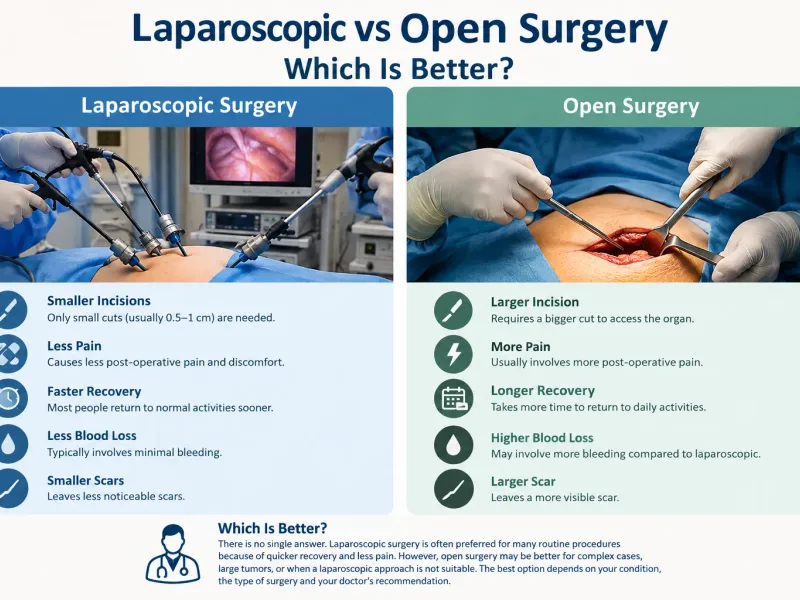
Neither method is better for everyone. For many common operations, laparoscopic (keyhole) surgery gives less pain, smaller scars and a quicker return to normal life. Open surgery remains the safer option when a case is complex or when the surgeon needs a full view and direct access.
The right choice depends on your condition, your overall health, earlier surgeries and, importantly, your surgeon's experience with each technique.
What Is the Difference Between Laparoscopic and Open Surgery?
How laparoscopic surgery works
The surgeon makes a few small cuts, usually around half to one centimetre each. A thin tube with a light and camera, called a laparoscope, goes through one cut. The surgeon watches the organs on a monitor and operates with slim instruments passed through the other cuts.
Gas, usually carbon dioxide, is gently pumped into the abdomen to create working space. This is why you may feel bloated or have shoulder discomfort for a day or two afterwards.
How open surgery works
In open surgery, the surgeon makes a single, longer cut over the area being treated. The muscles and tissues are moved aside, and the surgeon sees the organ with their own eyes and works with their hands.
This method is older and well proven. It gives a wide view and lets the surgeon feel the tissue, which helps in difficult situations.
Recovery, Pain and Scarring: How Do They Compare?
Smaller cuts mean less tissue damage. That is the main reason patients usually feel less pain after keyhole surgery and need fewer painkillers. According to Mayo Clinic, laparoscopic procedures generally involve a shorter hospital stay and quicker recovery than open operations.
A Cochrane review comparing the two methods for appendix removal found that laparoscopic surgery was linked to fewer wound infections, less pain after the operation and a shorter hospital stay. The same review noted that the evidence on deep abdominal infections was less certain.
Scars are another clear difference. Several tiny marks fade more easily than one long scar. Smaller wounds also mean a lower chance of a hernia developing at the cut site later, though this varies by procedure.
Risks and Limits of Laparoscopic Surgery
Keyhole surgery is safe in trained hands, but it is not risk-free. The surgeon works with a flat two-dimensional view on a screen and with long instruments, which takes specialised training.
Possible risks include bleeding, infection, injury to nearby organs and problems linked to the gas or anaesthesia. Rarely, a nearby structure can be hurt without being noticed during the operation. For example, bile duct injury is a recognised, uncommon complication of gallbladder removal, and it is one reason surgeon experience matters so much.
Laparoscopic surgery can also take longer than open surgery, especially in complex cases. Longer time under anaesthesia is a factor your surgical team will weigh for people with heart or lung conditions.
When Is Open Surgery the Better Choice?
Open surgery still has an important place. Doctors may recommend it in emergencies, in cases with widespread infection, or when previous operations have left dense scar tissue that hides the normal anatomy.
It may also be preferred for some large or advanced tumours, or when a patient's heart or lungs cannot tolerate gas being pumped into the abdomen.
"Conversion" is a term worth knowing. It means the surgeon starts with the keyhole method and switches to an open cut mid-operation. Patients sometimes fear this, but it is a planned safety option. Ask your surgeon in advance about the chance of conversion in your case, and sign the consent form with that possibility in mind.
What Does Research Say About Cancer Surgery?
Cancer operations need extra care, because the main goal is to remove the tumour completely, not just to recover quickly.
For colon cancer, large clinical trials such as COLOR and CLASICC found that laparoscopic surgery gave cancer outcomes comparable to open surgery when done by experienced surgeons. Patients in the keyhole groups generally recovered faster.
For rectal cancer, the picture is more nuanced. Some trials raised questions about whether keyhole surgery matches open surgery in every measure, so the decision is highly individual. This is exactly the kind of case where a specialist cancer surgeon's advice matters more than any general rule
Cost and Availability for Indian Patients
Laparoscopic surgery is now widely available in metro cities and in many tier-2 and tier-3 town hospitals across India. Specialised or robotic-assisted options are mostly found in larger centres.
The upfront bill for keyhole surgery can sometimes be higher, because of the equipment and disposable instruments used. But a shorter hospital stay and quicker return to work may reduce the overall cost and lost income.
Coverage differs between insurers and policies. Before surgery, ask the hospital for an itemised estimate and check with your insurer or TPA what is covered, including any difference if conversion to open surgery is needed.
How to Choose: Questions to Ask Your Surgeon
The best decision comes from an honest conversation. Consider asking:
Why do you recommend this approach for my condition?
How many of these operations have you performed using this method?
What is the chance that you will need to switch to open surgery?
What are the main risks in my case, given my age and health?
How long will I stay in hospital, and when can I return to work?
Is a second opinion sensible before I decide?
Frequently Asked Questions
Is laparoscopic surgery safer than open surgery?
For many routine operations, yes, it often has fewer wound complications and a faster recovery. But "safer" depends on your condition and the surgeon's skill. In complex or emergency situations, open surgery can be the safer route. Your surgeon can explain which option suits your case.
Is recovery faster after laparoscopic surgery?
Usually, yes. Smaller cuts cause less pain and tissue damage, so many patients leave hospital sooner and resume light activity earlier than after open surgery. Full recovery time still varies with the type of operation, your age, your general health and how closely you follow your doctor's advice.
Can laparoscopic surgery turn into open surgery?
Yes. Surgeons sometimes convert to an open cut during the operation if bleeding, scarring or unclear anatomy makes the keyhole approach unsafe. This is a precaution taken to protect you. Discuss the possibility before surgery, and make sure your consent covers it.
Is laparoscopic surgery more expensive in India?
It can cost more at the start because of specialised equipment, but the price varies by city, hospital and procedure. A shorter stay may offset some of the difference. Ask the hospital for a written estimate and confirm insurance coverage before you decide.
Are there any operations that cannot be done laparoscopically?
Some can't, or shouldn't be. Emergencies with major bleeding or infection, very large tumours and situations with dense scar tissue often need open surgery. Patients with certain heart or lung conditions may also be advised against it. Your surgeon will assess what is possible and safe for you.